
Disruptors in Action

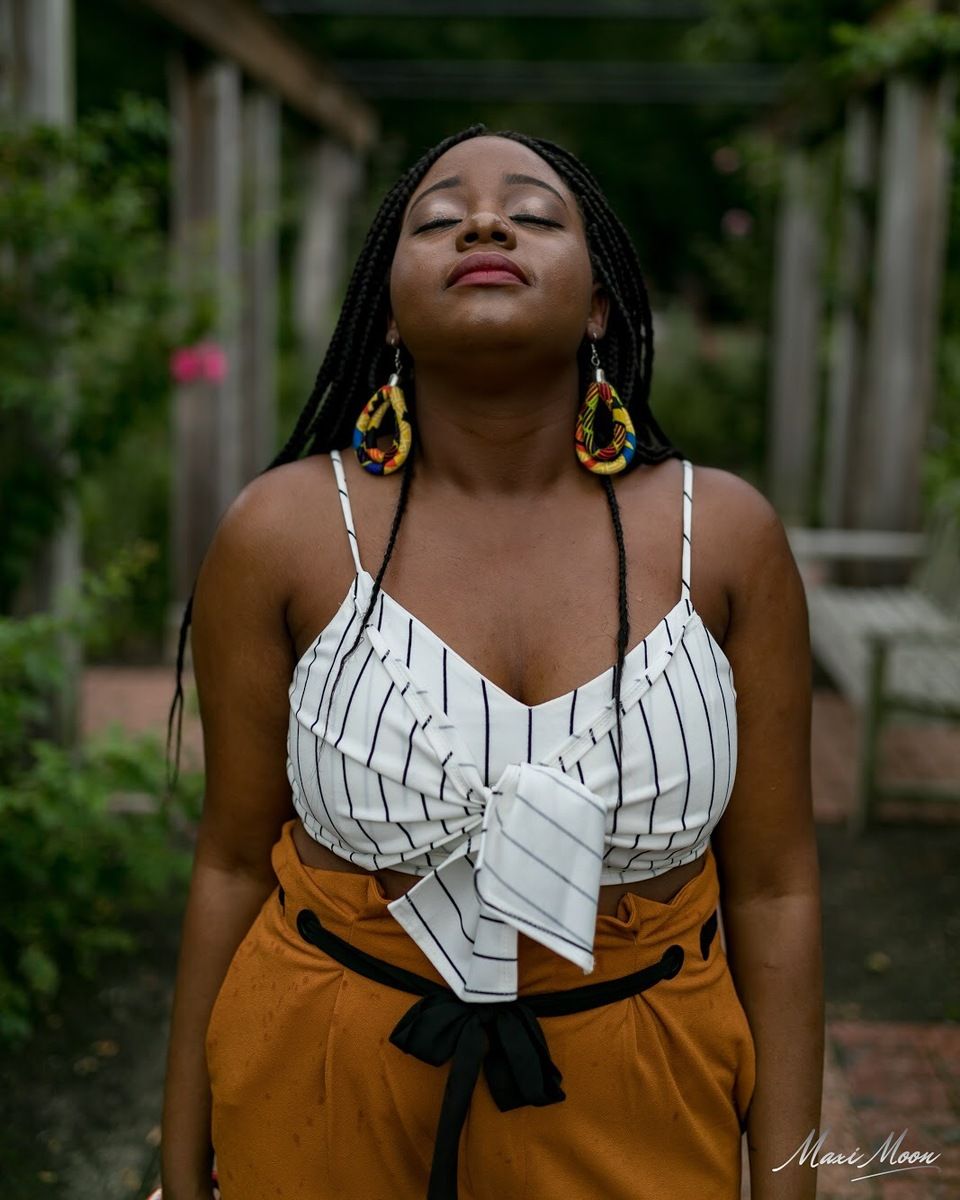
Photo by Farnese Motto
Lately, this phrase has been ringing in my ears, “return home.” In many ways, it captures what this new season of my journey feels like. But what does “return home” actually mean? I’m sure you’re asking yourself that.
For me, returning home means moving through life with presence and a deep conscious knowing that the path I’m on is meant for me. It means moving with clarity even when fear is present. It means listening to myself, even I don’t have all the pieces to the puzzle. It means prioritizing the essence of who I am and ensuring that what surrounds me reflects that—a bridge, or if we are being honest, sometimes a disruptor.
A few days ago, I came across a post on social media from Niké Aura, a community consultant and speaker, where she shared the idea that “we all disrupt in different ways.” This post highlighted how healthy communities are built when we shift away from centering only the most visible voices and toward advocating, educating, supporting, and creating space for necessary dialogue. One phrase she used stayed with me, ‘calling things in.’
Notice she did not say calling things out.
As someone who believes in the power of words and communication, that distinction mattered to me. Calling things in feels like an invitation. It creates space for people to pull up a chair and engage in conversations that may be uncomfortable, but necessary. It asks us to move beyond reaction to planned action. After reading this post, I found myself wondering, ‘as I return home to myself, in what way am I calling things in? In what ways am I consciously choosing to be a disruptor?’
These questions feel especially timely as we close the month of April, which held both National Public Health Week and National Minority Health Month. These moments served as reflection points (inviting me and many others) to think critically about what it actually means to build healthier communities.
As I continue growing in my doctoral training and examining the research across different domains, I often think about who are we truly inviting in and who might still be standing outside of the room. But beyond the world of research, I think these are questions we should all be asking ourselves.
For example, when we are designing a program or offering a solution to others, are we asking who should have access to it? And once we have an answer to that question, what is our role in ensuring it reaches the people with the greatest need? Are we considering structural barriers such as cost or transportation?
These questions in mind, I am calling us all in. In what ways are we opening doors and in what ways are perpetuating the very things we say we are working to change?
In recognition of National Minority Health Month, I also wanted to hold space for others who are engaging with similar questions in their own work. In this month’s Community Voices section, two doctoral scholars share their reflections and commitment to centering equity and the lived experiences of community members in their work.
Community Voices

Olajumoke Olarewaju
Olajumoke Olarewaju is a doctoral candidate in the Social and Behavioral Sciences program at Johns Hopkins Bloomberg School of Public Health. Ola holds a Masters of Arts in Demography and Population Studies. She is passionate about designing strategies that consider people's lived experiences and life events to improve health outcomes in meaningful, contextually relevant ways.
Email: [email protected] | LinkedIn
Q: What program are you in and what is your dissertation about?
A: “I am a fourth-year PhD candidate in Health, Behavior and Society at the Johns Hopkins Bloomberg School of Public Health. My dissertation examines pregnancy and substance use trajectories among people who use drugs, focusing on how pregnancy can shape, interrupt, or reinforce patterns of substance use across the life course. I use qualitative and life course approaches to examine how structural conditions, social expectations, stigma, criminalization, and access to support systems influence these experiences. A major part of my work centers on understanding pregnancy not only as a biological event but also as a social transition deeply shaped by culture, policy, and inequality. My research aims to contribute to more equitable and compassionate approaches to care for pregnant people who use drugs.”
Q: April is National Minority Month. Can you share a moment from your academic training so far that has shaped how you center equity in your own research?
A: “One of the most transformative parts of my doctoral training has been deepening my qualitative research skills and learning what it truly means to sit with people’s stories without rushing to reduce them to categories, outcomes, or interventions. Spending long hours engaging with qualitative data and transcripts changed how I think about health, behavior, and equity. It forced me to slow down and reflect on the structural inequalities that shape people’s lives, even in countries often perceived as having abundant opportunities, like the United States.
The more I engaged with people’s narratives across the life course, the more I understood that many behaviors are not isolated choices but are shaped by cumulative experiences, constrained options, social environments, and systems that advantage some while marginalizing others. That process fundamentally reshaped my understanding of equity, not as simply equal access but as a deeper recognition of the historical, structural, and social realities that shape the choices people can make in the first place.”
Q: As a black scholar working in public health, how do you define concepts like “health equity tourism” and what do you believe responsible, community-engaged research should look like in practice?
A: “As an African scholar born and raised in Nigeria, and as someone who has worked across countries and health systems, I have seen how easily equity language can become performative rather than transformative.
To me, “health equity tourism” occurs when researchers or institutions engage with equity only at the surface level, without fully grappling with the historical and structural forces that continue to shape present-day inequities. In many ways, public health is already doing important equity work, but generations of social, economic, and policy inequities continue to manifest in the disparities we see today. Meaningful progress therefore requires deeper, more sustained engagement.
Responsible community-engaged research should be grounded in humility, long-term accountability, reciprocity, and recognition that communities are experts in their own realities. Good public health research should not only document inequities but also ask harder questions about the systems, histories, and accumulated disadvantages that continue to shape people’s choices, opportunities, and health outcomes.”
Q: How has your approach to community engagement or qualitative research evolved during your doctoral training?
A: “My approach has become more reflexive, relational, and grounded in listening. Before doctoral training, I spent years working in NGO and global health settings, where community engagement was often framed around implementation and service delivery. During my PhD, qualitative research taught me to sit longer with complexity, contradiction, and context. I have learned that people’s stories do not always fit neatly into public health categories and that the “messiness” of lived experience often yields the most important insights. I am also more mindful of power dynamics in research, including whose interpretations are prioritized and how researchers can avoid extracting stories without meaningful accountability to the communities involved.”
Q: As you think about your next steps after completing your PhD, what do you hope to achieve or contribute to the field of public health?
A: “As I consider my next steps after completing my PhD, I hope to continue building a research career grounded in qualitative methods and life-course perspectives, particularly among people who use drugs and other structurally marginalized populations. I am especially interested in understanding critical transition points in people’s lives, such as pregnancy, treatment entry, housing instability, incarceration, loss, and recovery, and how these experiences shape health trajectories over time.
I also want to contribute more deeply to research on comorbidity, stigma, and intersectional stigma, particularly how overlapping experiences of substance use, mental health conditions, poverty, surveillance, and criminalization influence access to care and health outcomes. Methodologically, I hope to continue advancing qualitative and mixed-methods approaches that center lived experiences. I want my work to contribute to more humane, structurally informed, and person-centered public health interventions and policies.”

Mamadou Sy
Mamadou Sy is a trained physician and third-year PhD candidate at the George Mason University College of Public Health. His achievements include award-winning initiatives for advancing community-based wellness and social cohesion in.
Email: [email protected] | LinkedIn
Q: What program are you currently in and what is your dissertation about?
A: “I am currently completing a PhD in Public Health at George Mason University, with a concentration in Health Behavior and Society. My dissertation examines obesity treatment outcomes in the GLP-1 era through a multilevel equity lens.
More specifically, my work looks at how neighborhood deprivation, healthcare engagement, and behavioral strategies shape weight-loss outcomes among adults with obesity and metabolic dysfunction-associated steatotic liver disease, or MASLD. With the rapid expansion of GLP-1 medications, we have entered a new era in obesity treatment. However, my research is grounded in the belief that medication alone does not erase the social and structural conditions that shape health. Where people live, how they access care, whether they can remain engaged with treatment, and what behavioral support is available all matter.
Through my dissertation, I hope to better understand how emerging obesity treatments work in real-world settings and whether their benefits are equitably distributed across different social and neighborhood contexts.”
Q: April is National Minority Month. Can you share a moment from your academic training so far that has shaped how you center equity in your own research?
A: “One moment that shaped how I think about equity in research came from my early work using data from the Look AHEAD trial, one of the largest weight-loss trials examining the effects of intensive lifestyle intervention on cardiovascular morbidity and mortality.
Because of my interest in social determinants of health, I used participants’ ZIP codes to examine whether the effectiveness of the lifestyle intervention differed by neighborhood deprivation. My expectation was that neighborhood context would matter. I thought that factors such as food access, safe spaces for physical activity, transportation, and other environmental conditions might affect whether participants could benefit from a lifestyle intervention.
But the results were not what I expected. I did not find meaningful differences by neighborhood deprivation. At first, that surprised me. But when I looked more closely at the study population, I realized something important: although I could statistically define different levels of neighborhood deprivation, the overall sample was still highly educated and relatively socioeconomically advantaged. In other words, the trial included women and racial and ethnic minority participants, but it still did not fully represent the communities most affected by obesity and related chronic diseases.
That experience changed how I think about representation. It taught me that diversity in research cannot stop at race, ethnicity, or sex. Socioeconomic representation matters too. If the people who face the greatest structural barriers are systematically excluded from long-term trials because of transportation issues, work schedules, caregiving responsibilities, mistrust, or rigid study requirements, then our findings may not reflect the realities of the people most affected by the conditions we study.
For me, centering equity means asking not only, “Who is included?” but also, “Who is missing, and why?” It also means designing studies in ways that reduce barriers to participation—whether through transportation support, flexible scheduling, community partnerships, trust-building, or returning results in ways that are meaningful to participants. Chronic diseases such as obesity, diabetes, and hypertension disproportionately affect communities facing socioeconomic disadvantage. Our research should be designed so that those communities are not only represented, but genuinely included.”
Q: As a black scholar working in public health, how do you define concepts like “health equity tourism” and what do you believe responsible, community-engaged research should look like in practice?
A: “The term “health equity tourism” was new to me when I first saw this question, but the concept immediately resonated. I found out that it is the practice of investigators without prior experience or sustained commitment to health equity research “parachuting” into the field, often in response to funding opportunities or public attention, without the necessary grounding, accountability, or long-term investment.
To me, health equity tourism happens when equity becomes a label rather than a commitment. It is when researchers use the language of justice, disparity, or community engagement without doing the deeper work of building relationships, sharing power, understanding history, or giving back to the communities from whom data are collected.
Responsible community-engaged research should be done by, with, and for communities. That means communities should not only be recruited as participants, but engaged as partners in shaping the research questions, interpreting findings, and deciding how results are shared and used. It also means researchers are members of the communities, and have to be transparent about who they are, what they stand for, what the research can and cannot do, and what will happen after the data are collected.
As researchers, we often ask people deeply personal questions about their income, health, relationships, behaviors, identities, and lived experiences. If we expect that level of openness from participants, then we also have a responsibility to practice transparency and humility ourselves. We should not hide only behind our titles— PhD, MD, MPH, investigator — while asking communities to be vulnerable with us.
Another important part of responsible research is returning findings to the communities that made the work possible. Publications and conference presentations matter, but they are not enough. Many community members will never read a journal article, and even if they do, the format may not be useful to them. We should share findings in accessible ways, through community meetings, briefs, conversations, visuals, workshops, or other formats that communities can actually use.
I do not believe in research for the sake of research. I believe research should move something. It should clarify a problem, support action, strengthen communities, or challenge systems that produce inequity. That requires time, trust, humility, and accountability.”
Q: How has your approach to community engagement or qualitative research evolved during your doctoral training?
A: “My approach to community engagement has evolved by helping me name and deepen ideas that I already felt from my clinical background. Before entering public health, I trained and practiced as a physician. Clinical work taught me that trust is not optional. If people do not trust the healthcare system, the researcher, or the clinician, they may not come back, they may not share what is really happening, and they may not feel that the work is meant for them.
During my doctoral training, I have come to see community engagement not just as a method, but as a stance. It is about how we position ourselves in relation to the people and communities we study. I have become more aware of the importance of not seeing myself as outside of the community, coming in only to collect data, but as someone who is accountable to the communities connected to my work.
My training has also challenged the idea of complete neutrality. Of course, as researchers, we must not manipulate data to confirm what we want to believe. We have an obligation to be rigorous, transparent, and honest. But I also do not believe that researchers are blank slates. Our backgrounds, values, identities, and experiences influence the questions we ask, the frameworks we choose, and the way we interpret findings.
For me, the answer is not to pretend that we have no standpoint. The answer is reflexivity—being honest about what we bring to the work, what we care about, and what our limitations are. It is also important to be transparent with communities about what research can do and what it cannot do. Researchers should not present themselves as saviors. We do not have that kind of power. But we also should not use institutional constraints as an excuse to avoid change. Even within academic systems, we can choose to build more respectful, transparent, and accountable research practices.”
Q: As you think about your next steps after completing your PhD, what do you hope to achieve or contribute to the field of public health?
A: “After completing my PhD, I hope to contribute to a public health field that takes representation seriously—not only racial, ethnic, and gender representation, but also socioeconomic representation. Over time, research policies and expectations have changed to improve the inclusion of women and racial and ethnic minority groups in clinical studies. That progress matters. But I believe we need to go further.
Socioeconomic status shapes health in profound ways. As a Black scholar, I recognize that my experiences may overlap with, but are not identical to, those of Black individuals living in highly deprived communities. Race matters, but race does not erase differences in income, education, housing, neighborhood conditions, transportation access, or healthcare access. If we want research to be meaningful for the populations most affected by chronic diseases, then we need to ensure that people from lower socioeconomic backgrounds are not left out of the evidence base.
I hope to be involved in studies that do more than acknowledge mistrust or underrepresentation. I want to help design research that actively reduces barriers to participation, builds long-term relationships, and creates conditions where communities that have been historically excluded can see value in participating.
I also want to help ensure that public health remains public. By that, I mean that our work should not live only in academic journals, conference rooms, or statistical models. We have a responsibility to communicate findings in ways that are accessible to the broader public. I see myself continuing to write, teach, mentor, and develop ways to translate scientific findings into language and tools that communities can use. I want my work to help move public health closer to its purpose: not only documenting inequities, but contributing to the conditions that allow people and communities to live healthier, more dignified lives.”
P.S. I would love to feature more voices from YOU in future issues. If you feel inspired to share your thoughts, experiences, or work, please don’t hesitate to reach out.
Until next time, I leave you with the thought below:
(1) In what ways can you be a disruptor? (2) How can you better include voices that are often ignored?
Write it down or say it to yourself.
Resources:
Feel free to leave a comment or share this article if something resonates with you.
